What Is an Aluminum Entry Door?

Time:2026-09-30 Author:Amelia
0%

An Aluminum Entry Door is more than a bright, modern surface at a home’s entrance. It is a working building component that manages security, weather, heat, and daily impact. Grand View Research’s 2024 Aluminum Doors Market report identifies continued demand for aluminum systems, supported by durability, design flexibility, and low maintenance. That trend sounds convincing, but market growth does not guarantee a good installation.

Performance depends on the complete door assembly. The frame, thermal break, glass, seals, threshold, and wall connection must work together. The U.S. Department of Energy’s building-performance guidance repeatedly emphasizes this principle: air leakage and poor installation can undermine otherwise efficient products. A beautiful door can still admit cold drafts around its edges. Small gaps matter.

Dr. Joseph Lstiburek, a respected building-science expert, explains the issue simply: “Windows are holes in walls.” The same warning applies to entry doors. An Aluminum Entry Door creates a large opening, so its details deserve serious attention. Experienced installers check plumb alignment, compression seals, drainage paths, and fastener placement before judging the finish.

There is no perfect material.

Aluminum resists rust and supports slim profiles, yet basic frames can transfer heat quickly without a proper thermal break. Homeowners should compare tested U-factor, air-leakage, water-resistance, and structural-performance data. Certifications from recognized testing bodies add credibility, but they do not replace site-specific judgment. This guide examines those practical choices, including where aluminum performs brilliantly and where it may disappoint.
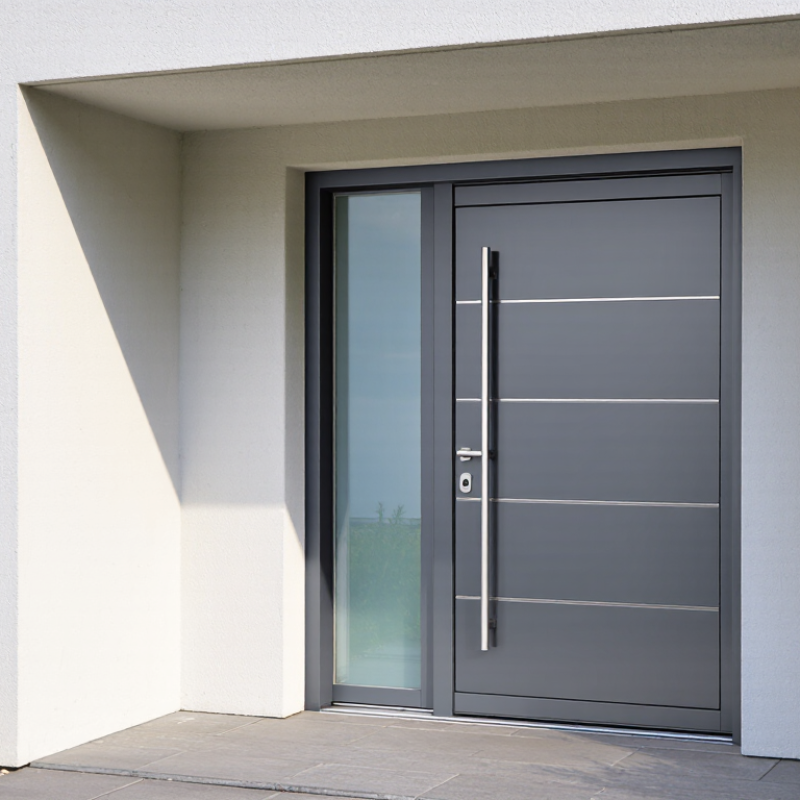
What Is an Aluminum Entry Door?

Aluminum Entry Door Basics: A 2.70 g/cm³ Lightweight Metal System

What Is an Aluminum Entry Door?

Aluminum Entry Door Basics: A 2.70 g/cm³ Lightweight Metal System

An aluminum entry door uses a framed metal system for a home's main entrance. Aluminum has a density of about 2.70 g/cm³, making it much lighter than steel. That lower weight can simplify handling during installation. It also reduces stress on hinges, fasteners, and surrounding masonry.

In practice, the frame usually includes thermal breaks, weather seals, glazing, and an adjustable threshold. These parts affect comfort as much as the aluminum itself. A powder-coated or anodized surface can resist moisture and everyday scratches. Aluminum naturally forms a thin oxide layer, which helps limit corrosion. Still, coastal air and standing water require regular inspection. Lightweight does not mean fragile. A well-designed profile can feel rigid, but thin sections may dent under sharp impact. That assumption can fail.

Tips: Check the frame depth, thermal-break design, seal quality, and threshold drainage before ordering. Ask the installer how the door will be anchored to the wall. Small gaps often cause drafts, water entry, and rattling. Clean the frame with mild soap and water. Avoid harsh abrasives. I would also inspect the lower corners after heavy rain, because drainage problems often appear there first. Measurement deserves patience. An attractive door can still perform poorly when the opening is uneven.

Core Components: Frames, Panels, Thermal Breaks, Glazing, and Hardware

What Is an Aluminum Entry Door?

An aluminum entry door combines a lightweight metal frame with a solid or glazed door panel. Its performance depends on more than the metal itself. During site inspections, I check frame alignment, corner joints, seals, and drainage paths. Poor installation can make a well-designed door feel loose or drafty.

The frame supports the panel and transfers hinge loads into the wall. A thermal break separates inner and outer aluminum sections, reducing heat movement through the frame. Without it, the interior edge may feel cold and collect condensation in humid weather. The panel can contain insulated cores, reinforced rails, or narrow aluminum sections. These details affect stiffness, weight, and sound control.

Glazing adds daylight but creates another performance point. Double glazing, warm-edge spacers, and tight gaskets can improve comfort near the glass. Hardware includes hinges, locks, handles, closers, and adjustable strike plates. Each part must match the panel weight and daily use. Small alignment errors matter. A lock may operate perfectly in the workshop but bind after settlement on site. I have seen this overlooked more than once. Regular adjustment and careful sealing are practical, not cosmetic. Temperature, moisture, and frequent traffic will expose weak details over time.

Thermal Performance: Aluminum Conducts Heat at About 205 W/m·K

What Is an Aluminum Entry Door?

An aluminum entry door uses lightweight metal for its frame, panels, or both. Its main thermal challenge is conductivity. Aluminum transfers heat at about 205 W/m·K, according to commonly cited engineering data and ASHRAE Handbook—Fundamentals values for aluminum alloys. Steel conducts far less heat, while wood and many polymers resist heat more effectively.

This high conductivity can create a thermal bridge around the frame. In winter, indoor warmth may travel toward the cold exterior. In summer, outdoor heat can move inward. The result may include a colder interior frame, surface condensation, or higher heating and cooling demand. The U.S. Department of Energy’s Building America guidance identifies thermal breaks as an important strategy for reducing these losses. NFRC 100 also provides standardized methods for evaluating door and fenestration U-factors.

Performance depends on more than the metal itself. A polyamide thermal break, insulated core, low-conductivity spacer, and accurate weather seals can interrupt the heat path. A well-installed door matters too. Even a strong design can underperform when the sill is poorly sealed.

Tips: Check the complete-door U-factor, not only the aluminum’s conductivity. Ask for NFRC-rated data when available. Inspect the frame corner, threshold, and lock area; these small zones often reveal weak detailing. Real projects can disappoint. Local climate, installation quality, and daily exposure may change the result.

What Is an Aluminum Entry Door? - Thermal Performance: Aluminum Conducts Heat at About 205 W/m·K

Material or Component Representative Thermal Conductivity
(W/m·K at approximately 20–25°C)
Relative Heat Flow Relevance to an Entry Door
Aluminum Approximately 205 for pure aluminum; many structural alloys are lower Very high Transfers heat quickly when the frame is not thermally separated.
Thermal-break polyamide Approximately 0.25 Low Interrupts the metal path between the exterior and interior frame sections.
Window or door glass Approximately 0.8–1.0 Moderate Insulating glass units reduce heat transfer by using air or inert-gas cavities.
Carbon steel Approximately 45–60 Moderate to high Conducts less heat than aluminum but still requires insulation and careful frame design.
Softwood Approximately 0.12–0.20 Low Naturally resists heat flow, although moisture content and density affect performance.
Rigid polyurethane foam Approximately 0.020–0.030 Very low Commonly used as an insulating core to improve the door slab's thermal resistance.
Unplasticized PVC (uPVC) Approximately 0.17–0.25 Low Provides relatively low-conductivity frame sections, often with internal chambers.
Key performance factors: An aluminum entry door can achieve good thermal performance when it uses a continuous thermal break, insulated glazing or an insulated door core, compression seals, and a properly insulated threshold. Thermal conductivity describes the material itself; the overall door U-factor also depends on the frame, slab, glass area, edge conditions, seals, installation, and air leakage.

Note: Values are representative reference ranges for commonly used materials at room temperature. Actual results vary with alloy, density, moisture content, temperature, product construction, and testing method.

Durability and Security: Corrosion Resistance, Strength, and Tested Hardware

What Is an Aluminum Entry Door?

Durability and Security: Corrosion Resistance, Strength, and Tested Hardware

An aluminum entry door uses a lightweight metal frame and panel for exterior access. Its main advantage is corrosion resistance, especially in humid or coastal environments. Unlike untreated steel, aluminum does not develop red rust when its surface is scratched. However, salt, dirt, and trapped moisture can still damage finishes over time. Regular cleaning remains necessary.

Strength depends on the door profile, frame design, and installation quality. A properly reinforced aluminum door can resist warping and daily impact. During a site inspection, I would check the frame corners, hinge fasteners, and lock-side reinforcement. Small gaps can reveal movement before security problems become obvious. The door should close firmly without forcing the handle.

Hardware matters just as much. Tested hinges, cylinders, handles, and multi-point locks should match the door’s weight and usage. Reliable hardware supports smooth operation and helps resist forced entry. Fasteners should be corrosion-resistant and securely anchored into the frame or surrounding structure. A strong panel cannot compensate for weak hardware.

No door is maintenance-free. That is easy to forget. Coastal air may require more frequent cleaning, while heavy traffic can loosen hardware. I would also review the manufacturer’s test documentation, installation instructions, and service requirements before choosing a system. Performance ratings are useful, but poor installation can reduce real-world protection. A careful inspection often matters as much as the material itself.

Sustainability Profile: Recycled Aluminum Uses About 5% of Primary Energy

What Is an Aluminum Entry Door?

An aluminum entry door uses lightweight metal for its frame, panels, or both. Its clean edges suit modern homes, while its resistance to rust supports long service in wet climates. A well-designed frame may include thermal breaks, which reduce heat transfer between the indoor and outdoor surfaces. That detail matters near a cold hallway or a sunlit entrance.

Sustainability Profile: Recycled Aluminum Uses About 5% of Primary Energy

Recycled aluminum requires about 5% of the energy used to produce primary aluminum from mined ore. This large difference comes from avoiding ore refining and intensive smelting. Old window frames, doors, and other recovered products can return to the material cycle. The metal keeps its useful properties after repeated recycling.

That number sounds almost too perfect. It is not a complete door assessment. Collection systems, transport distance, electricity sources, and manufacturing losses can change the result. I would not call every aluminum entry door automatically sustainable. Glass, coatings, seals, hardware, and replacement parts also affect its footprint. A responsible specification asks for recycled content information and checks whether the frame includes a thermal break. It also considers repair access, because a durable door creates less waste over time. Small details count.

FAQS

What is an aluminum entry door?

It is a framed metal entrance system for a home’s main doorway. Aluminum has a density of about 2.70 g/cm³. This makes it lighter than steel and easier to handle during installation.

Does a lightweight aluminum door lack strength?

Not necessarily. A well-designed profile can feel rigid and resist daily impact. Thin sections may dent under sharp force. Lightweight does not mean fragile, but that assumption can fail.

Which parts affect comfort and weather protection?

Thermal breaks, weather seals, glazing, and an adjustable threshold matter greatly. These components help reduce drafts and improve indoor comfort. The aluminum frame alone cannot do everything.

How can I reduce drafts and water entry?

Check the seal quality, frame depth, and threshold drainage before ordering. Small gaps may cause drafts, water entry, or rattling. Inspect the lower corners after heavy rain. Problems often appear there first.

Is aluminum suitable for humid or coastal locations?

Aluminum resists red rust better than untreated steel. However, salt, dirt, and trapped moisture can still damage the finish. Clean the surface regularly with mild soap and water. Coastal air demands attention.

What should I inspect before choosing a secure door system?

Check the frame corners, hinge fasteners, and lock-side reinforcement. The door should close firmly without forcing the handle. Tested hinges, cylinders, handles, and multi-point locks should match the door’s weight.

Can strong hardware compensate for a weak frame?

No. Strong hardware cannot fully compensate for poor framing or weak anchoring. Fasteners should resist corrosion and connect securely with the frame or surrounding wall. Small gaps may reveal movement early.

How important is professional installation?

Installation quality strongly affects real-world performance. The opening must be measured carefully, especially when the wall is uneven. Ask how the frame will be anchored. A beautiful door can still perform poorly.

How should an aluminum entry door be maintained?

Wash the frame with mild soap and water. Avoid harsh abrasives that may scratch the finish. Inspect seals, drainage areas, hinges, and fasteners periodically. No exterior door is truly maintenance-free.

Conclusion

An Aluminum Entry Door is a lightweight, durable door system built around aluminum, a metal with a density of approximately 2.70 g/cm³. Its main components include the frame, door panels, thermal breaks, glazing, and hardware. Together, these parts provide structural support, weather protection, visual appeal, and convenient operation. Because aluminum conducts heat at about 205 W/m·K, thermal breaks are essential for reducing heat transfer and improving indoor comfort and energy performance.

Beyond its efficient design, an Aluminum Entry Door offers strong resistance to corrosion and everyday wear, while properly tested hardware can enhance security and reliable operation. Aluminum also has a favorable sustainability profile: recycled aluminum requires only about 5% of the energy used to produce primary aluminum. This combination of light weight, strength, durability, thermal engineering, and recyclability makes aluminum a practical material for modern entrance systems.

Amelia

Amelia

Amelia is a seasoned marketing professional with a wealth of expertise in our company’s core offerings. With an unwavering passion for driving growth and innovation, she plays a pivotal role in shaping our marketing strategies and enhancing brand visibility. A key aspect of her responsibilities......