An Aluminum Residential Door is more than an entrance. It shapes curb appeal, daylight, privacy, and the boundary between indoor comfort and outdoor weather. The right choice depends on frame design, glass area, thermal breaks, hardware, and installation quality. A slim black frame can sharpen a modern façade; a glazed sliding door can bring afternoon light into a kitchen. Small details matter. Designer Charles Eames captured that idea: “The details are not the details. They make the design.” His words are not door-specific, but they offer a useful lens for comparing styles.
Material performance also deserves attention. The Aluminum Association reports that about 75% of all aluminum ever produced remains in use today, reflecting the material’s durability and recyclability. That figure is not a guarantee that every aluminum door is sustainable. Finish, recycled content, product lifespan, and end-of-life handling all matter. A thermally broken frame can help limit heat transfer, while weather seals and careful fitting help reduce drafts. Check the product specifications, not just the showroom sample.
This guide explores ten common types of aluminum residential doors, from hinged entry doors to folding and sliding systems. Each suits different rooms, openings, and design priorities. Some create broad, bright connections to a patio. Others offer a quieter, more secure front entrance. There is no universal winner. A beautiful door can still disappoint if it leaks air or feels awkward to operate. The comparisons ahead can help homeowners ask better questions before choosing.
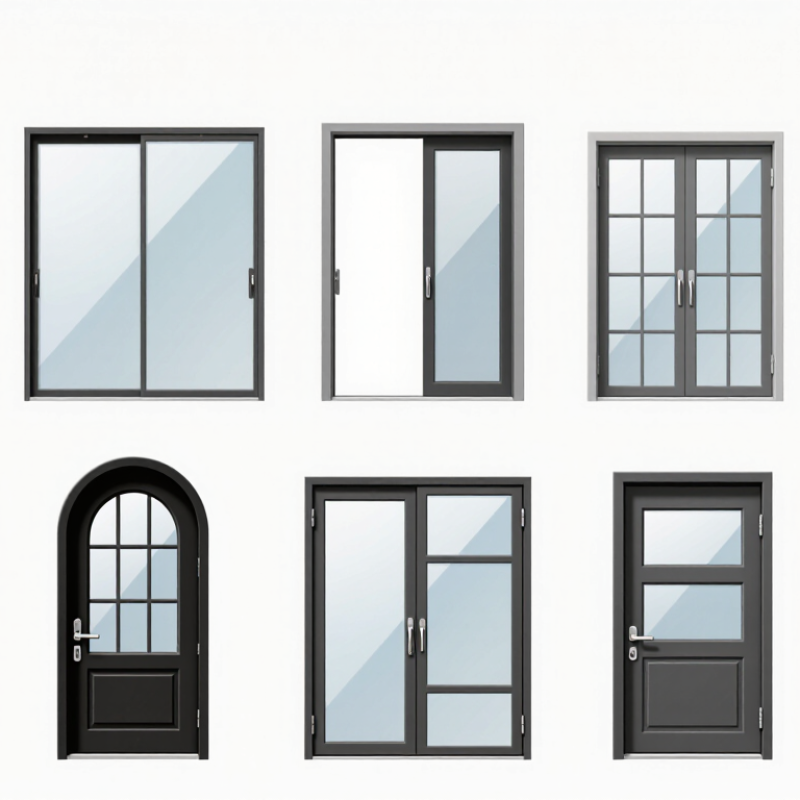
An aluminum residential door starts with an extruded frame, cut and joined at the corners. Many profiles use a thermal break: a low-conductivity strip separating the exterior and interior aluminum. Without it, heat can travel through the frame. Still, a thermal break is not a complete answer; poor corner joints or worn seals can undermine its benefit. The U.S. Department of Energy reports that heat gain and loss through windows account for 25%–30% of residential heating and cooling energy use. That figure covers windows, not doors alone, but it shows why glazing and frame design deserve attention.
The door leaf may hold insulated glass, a solid panel, or both. Glazing beads secure the glass, while weatherstripping compresses against the frame when the door closes. At the bottom, a well-fitted sill and drainage paths help direct rain outward. Small gaps matter. Look for NFRC-rated U-factor and solar heat gain coefficient values when comparing glazed options; these measurements describe heat transfer and solar heat entering the home. Check the actual assembly, too: hardware alignment, corner seals, and glass-edge seals affect everyday performance. A specification sheet cannot reveal every installation flaw. I would inspect the closed door in person, especially at the threshold, where drafts often make themselves obvious.
Aluminum doors come in several styles, each suited to a different opening. A single-hinged entry door works well for a compact porch, while a double-hinged door creates a wider entrance. French-style doors bring paired glass panels to a dining room or garden exit. Pivot doors turn on a central hinge and can make a bold entry, but they need careful planning for clearance.
For patios, sliding doors save floor space, and lift-and-slide models can move large glass panels with less effort. Multi-slide doors stack several panels to open a broader view. Bi-fold doors fold at the sides, linking indoor and outdoor areas, though their tracks need regular cleaning. Aluminum louvered doors allow airflow while maintaining privacy in utility spaces. An aluminum screen door helps keep insects outside without blocking the breeze. Simple, but useful.
Frame quality matters. Thermal breaks can reduce heat transfer, while sound seals and well-fitted thresholds help limit drafts and street noise. Glass choice also affects comfort and privacy. A wide glass door may look light and open, yet it can need more frequent cleaning. Not every style suits every home. Check the opening size, local weather, and how much maintenance feels realistic before choosing.
Aluminum residential doors differ not only in appearance, but also in how they move and frame a view. Single-hinged doors suit compact entries, while double-hinged and French doors create a wider, balanced opening. Sliding doors travel along a track, saving floor space beside a patio. Lift-and-slide models rise slightly before moving, which can help large glazed panels operate smoothly. Bi-fold doors stack at one side, and stacking sliders gather panels without folding them. Pivot doors turn on floor and head fittings, giving an entry a broad, clean face. The categories overlap a little; hardware and panel size can change how a door feels in daily use.
Glazing choices shape both light and privacy. Full-height glass brightens a living room, while divided panes add visual rhythm to a traditional façade. Tilt-and-slide doors can provide a small ventilation opening without moving the full panel. Doors with sidelights bring daylight into an entry, though the extra glass may reduce privacy from the street. Fixed glazing beside an operable door can widen the view, but it does not add another passage. Small detail, big difference. Compare clear sightlines, frame proportions, and opening clearance in the actual room. A wide panel may look effortless in a photograph and feel heavy in use; ask about panel weight, track support, seals, and maintenance before choosing.
Choosing an aluminum door starts with the room, not just its appearance. A hinged entry door suits a clear approach and offers a familiar, solid feel. Check the frame depth, threshold, and locking hardware against the wall opening. For a sunny entrance, consider insulated profiles and suitable glazing to limit heat gain. Clearance matters.
Sliding doors work well between a living room and patio because their panels do not swing into furniture. Their tracks need regular cleaning, especially where dust or grit collects. For wider openings, folding panels can create a broad passage, but they need room to stack and careful alignment. A floor-level track may look neat, yet water drainage and accessibility deserve attention.
Bathrooms and laundry rooms often benefit from aluminum doors because the material handles humidity well. Choose opaque or textured glazing where privacy matters, and check that hinges and finishes suit frequent cleaning. For bedrooms, a tightly fitted door and appropriate seals may reduce drafts, but aluminum alone does not guarantee sound insulation. I would not choose solely by color; a sleek finish can still show scratches near busy handles. Measure the actual opening, then compare the door’s thermal and weather-performance details before deciding.
Aluminum residential doors can perform well for years, but installation quality matters as much as the frame itself. Before fitting a sliding, hinged, or folding door, check that the opening is square and the sill is level. A few millimeters of misalignment can cause rubbing, uneven seals, or water pooling near the threshold. Small gaps matter. Use suitable flashing and sealant, while keeping designed drainage paths clear. Blocking weep holes can trap water inside the frame.
Different door styles need different adjustments. Sliding doors rely on clean tracks and correctly set rollers; hinged doors need secure fixings and even gaps around the panel. Leave room for the frame’s normal thermal movement, and follow the installation instructions for anchor spacing. A level and careful measuring help. Do not rush. Even experienced installers can miss a slight twist that becomes obvious only when the lock stops engaging smoothly.
For routine care, wash frames with mild soap and water, then rinse away grit that could scratch the finish. Inspect weatherstripping, corner joints, drainage openings, and fasteners at least twice a year, especially after harsh weather. Lubricate moving hardware only as directed; excess oil can collect dust. Condensation is not always a door defect, but persistent moisture deserves attention. Owners sometimes overlook a blocked sill until stains appear. Regular checks are simple, though they cannot compensate for poor installation or neglected seals.
A single-hinged door usually needs less opening width. Check that nearby furniture will not block its swing.
Their panels move along a track instead of swinging into the room. Keep the track clean.
Bi-fold panels fold and gather at one side. Stacking sliders slide together without folding. The opening feels different in daily use.
Yes. Sidelights bring daylight beside the door, but may reduce privacy from the street. Consider where passersby can see in.
Make sure the opening is square and the sill is level. Even a few millimeters of misalignment can cause rubbing or water pooling.
Wash them with mild soap and water, then rinse away grit. Grit can scratch the finish.
Check weatherstripping, drainage openings, corner joints, and fasteners at least twice a year. Look again after harsh weather.
No. But persistent moisture deserves attention. A blocked sill may go unnoticed until stains appear. I might check it sooner.
This article explores the construction of an Aluminum Residential Door, including how its frame, panels, hardware, and glazing work together to provide strength, style, and everyday functionality. It introduces ten door types suitable for homes, from hinged and sliding designs to folding, pivot, and glass-panel options. Each type is compared by appearance, opening operation, and glazing possibilities, helping readers understand how design choices affect light, privacy, access, and available space.
The guide also explains how to select a suitable door for different areas of a home, such as an entryway, patio, or interior connection. Practical considerations include the opening size, desired level of daylight, surrounding layout, and intended use. Finally, it outlines installation and routine maintenance considerations that can support smooth operation and long-term performance, helping homeowners make an informed choice for their needs.

OptiDoors