Choosing the best Aluminum Entrance Door is not only a style decision. It affects security, weather resistance, daylight, energy use, and long-term maintenance.
The International Energy Agency reports that buildings consume about 30% of global final energy. The U.S. Department of Energy also notes that windows and doors can influence a home’s heating and cooling performance. These figures do not isolate aluminum entrance doors, so they should not be treated as direct product guarantees. Market reports often combine residential, commercial, interior, and exterior door categories. That limitation matters.
Real performance begins at the opening.
Building-science expert Joseph Lstiburek is widely known for saying, “Water is a three-dimensional problem.” His warning is practical. A beautiful aluminum frame can still fail when the threshold lacks drainage, the flashing is incomplete, or the installation is rushed. Look closely at the sill, corner joints, thermal break, weather seals, glass specification, and lock system. Ask for tested air, water, structural, and thermal performance.
A useful choice balances evidence with daily experience. Touch the handle. Check the closing force. Stand near the frame on a cold morning. Small details reveal large weaknesses.
This guide will compare materials, profiles, finishes, security features, energy ratings, installation methods, and maintenance needs. Some recommendations may remain conditional. Climate, exposure, budget, and building design change the answer. There is no universally perfect door. There is only a better-matched one.
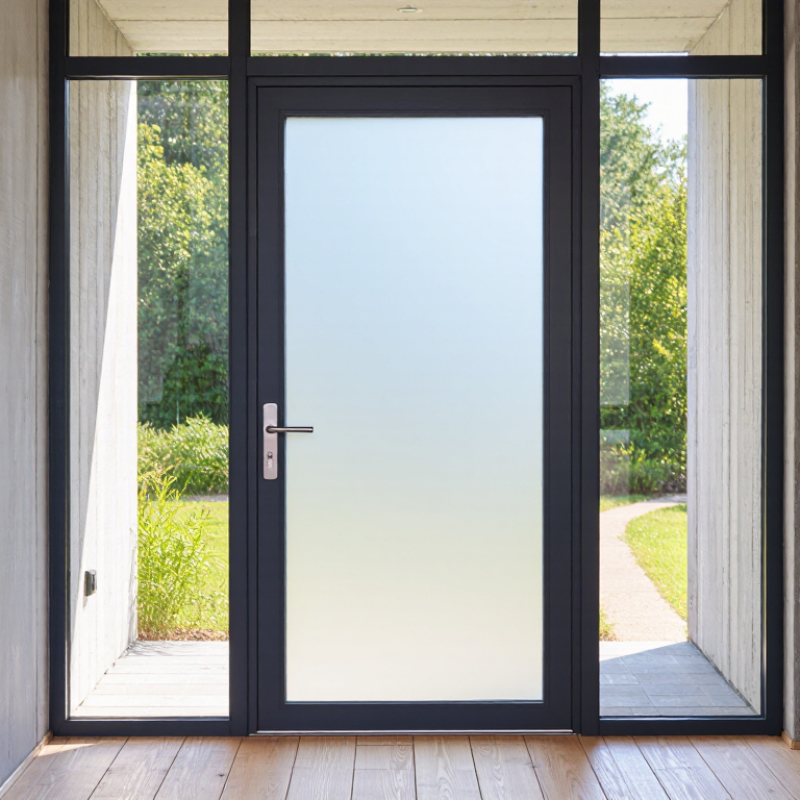
How to Choose the Best Aluminum Entrance Door?
Define your aluminum entrance door needs before comparing finishes or handle designs. Start with climate, exposure, daily traffic, and available wall space. A coastal home may need stronger corrosion resistance and carefully selected hardware. A shaded entrance may prioritize insulation over solar control. In cold regions, ask for a thermally broken frame, low U-factor, and tested air leakage results. The U.S. Department of Energy reports that windows can cause 25–30% of residential heating and cooling energy use. Your entrance door is only one opening, but poor sealing still wastes comfort and money.
Security needs should be specific. Consider multi-point locking, laminated glazing, hinge protection, and a reinforced strike area. Ask for performance testing, not vague claims. Look for air, water, structural, and thermal ratings from recognized testing systems, such as NFRC or FGIA procedures. The International Energy Agency’s 2023 buildings report states that buildings used about 30% of global final energy in 2022. That figure does not make every door an energy solution. It does show why envelope details deserve attention.
Installation can defeat a good specification. Measure the opening twice. Check sill drainage and the surrounding wall condition. A beautiful door can still leak through an uneven threshold. I would also question oversized glass panels when privacy and security matter more. Priorities sometimes conflict. Lower heat gain, daylight, visibility, and cost cannot all lead at once. Reconsider your list after reviewing actual weather, household habits, and maintenance ability.
Choosing an aluminum entrance door starts with comparing style, material, and construction quality. A slim-frame design creates a clean, modern appearance and allows more daylight indoors. A full-panel door offers stronger privacy and a more solid visual presence. Large glass panels need careful selection, especially in homes facing busy streets or harsh sunlight. The best style should fit the building, not only current design trends.
Aluminum alloys vary in strength, thickness, and surface performance. Look for corrosion-resistant finishes and clearly stated material specifications. Thermal breaks reduce heat transfer through the frame. Without them, the interior edge may feel cold during winter. Ask about insulated glass, drainage paths, and tested weather seals. These details often matter more than decorative handles. Color samples should also be viewed outdoors, because sunlight can change their appearance.
Construction quality deserves close inspection. Check whether frame corners are mechanically joined or reinforced for stability. The door should open smoothly without rubbing against the threshold. Locking points must align accurately. Request documented air, water, and structural performance testing when available. Installation is equally important; even a well-made door can leak if the opening is poorly measured. A common mistake is choosing a heavy frame and assuming it guarantees durability. It does not. Weak hinges, uneven fitting, or low-quality seals can still shorten service life. Even attractive doors need practical review.
How to Choose the Best Aluminum Entrance Door?
Energy performance starts with the frame, glass, and installation. The U.S. Department of Energy reports that windows can cause 25–30% of household heating and cooling energy use. A poorly sealed entrance door can add similar discomfort near the floor. Check the NFRC label for U-factor and solar heat gain coefficient. Lower U-factor usually means better insulation. Thermal breaks matter. Without them, aluminum can feel cold on winter mornings.
Security requires more than a heavy appearance. Examine the lock case, hinge reinforcement, cylinder protection, and frame anchoring. Ask for tested results under recognized standards, rather than vague claims. A multi-point lock may improve resistance, but weak screws can still undermine it. I once saw a solid-looking door move because the installation points were too shallow. That detail is easy to miss.
Durability depends on water control and maintenance. FGIA test methods evaluate air leakage, water penetration, and structural performance. Look for evidence from tests such as ASTM E283 and ASTM E331. The threshold should direct rain outward, while compression gaskets should remain flexible. Check the coating specification, drainage paths, and corner joints. NOAA climate records can reveal local wind, rainfall, and temperature stress. Coastal homes need stronger corrosion planning. Even excellent aluminum can stain around cut edges. Weather resistance is never only a material question.
Compare the relative performance of a basic insulated aluminum entrance door with a high-performance target. The index combines energy efficiency, security, durability, and weather resistance; a higher score indicates stronger performance.
Lower U-value is better. The target uses U ≤ 1.4 W/m²K.
Resistance Class 2 (RC2) provides stronger protection than RC1 under EN 1627.
The target represents 200,000 opening and closing cycles under EN 12400.
The target represents 600 Pa water-tightness pressure under EN 12208.
The chart uses representative, non-brand benchmark values. Actual results depend on the complete door system, glazing, seals, frame design, installation, and test conditions.
How to Choose the Best Aluminum Entrance Door?
Choosing an aluminum entrance door starts with accurate measurements. Measure the opening at several points, including width, height, and depth. Walls are rarely perfectly square. Leave space for proper fitting, insulation, and adjustment. A door that looks attractive may still perform poorly if its frame is too tight.
Hardware should match daily use and local weather conditions. Choose sturdy hinges, a reliable lock, and a handle that feels comfortable. Coastal homes may need corrosion-resistant components. Glass also deserves careful attention. Double glazing can improve insulation, while laminated glass may offer better impact resistance. Clear glass brings in daylight, but textured glass provides more privacy. Check the glass specification, not only its appearance.
The finish should suit the building and withstand regular exposure to sunlight and rain. Powder-coated surfaces are practical, but preparation quality still matters. Ask how the frame was treated before coating. Opening direction is easy to overlook. Confirm whether the door should swing inward or outward, and check nearby walls, steps, furniture, and escape paths. I once saw a beautiful door block a narrow hallway because this detail was ignored. It was a small mistake. Choose left or right operation from the approach side, and verify the decision on the site. Professional installation remains essential. Even the best door can leak air or water when the frame is poorly aligned.
Choosing an aluminum entrance door starts with the opening, not the finish. Measure the width, height, wall depth, and threshold level before comparing designs. An experienced installer should inspect masonry, drainage, and nearby wiring. An attractive door can still fail when the frame meets a damp or uneven wall. Ask for written details about anchoring, flashing, insulation, and weather sealing. These requirements affect labor time and indoor comfort.
Maintenance is usually simple, but it is not zero. Clean the frame with mild soap, check seals each season, and lubricate hinges according to the hardware instructions. Watch for water marks near the sill. They may indicate poor drainage, not a dirty surface. Compare the total cost, including delivery, removal, permits where required, installation, finishing, hardware, and future repairs. A cheaper quote may exclude threshold preparation or interior trim. I once underestimated these small items, and the final bill was higher than expected. That mistake changed how I review estimates.
Tips: Request two or three itemized quotes. Confirm who handles measurements and adjustments. Ask how the door performs in your climate, especially during heavy rain, heat, or freezing weather. Keep the warranty and care instructions safely stored. Leave contingency money for hidden damage. Old walls are rarely perfect.
Consider your climate, sunlight, daily traffic, privacy needs, and available wall space. Measure twice. Your priorities may change after reviewing actual weather and household habits.
Choose a thermally broken frame, insulated glass, a low U-factor, and tested air leakage results. Check the interior frame edge. Without thermal separation, it may feel cold during winter.
Select corrosion-resistant finishes and suitable hardware for salty, humid air. Ask for clear material specifications. Maintenance still matters, and my initial confidence might be too high without local exposure details.
Consider multi-point locking, laminated glazing, hinge protection, and a reinforced strike area. Ask for documented testing. Do not rely on vague security claims.
Slim frames provide a modern appearance and more daylight. Full panels offer stronger privacy and a heavier visual presence. Neither style wins everywhere. Busy streets may make large glass panels uncomfortable.
Consider insulation, privacy, sunlight, visibility, and security together. Large glass can brighten a hallway but expose indoor activity. Lower heat gain and greater daylight may conflict.
Inspect frame thickness, corner reinforcement, drainage paths, weather seals, hinges, and locking alignment. Open the door slowly. It should move smoothly without rubbing the threshold.
Poor measurements, uneven thresholds, or damaged surrounding walls can cause leaks. Check sill drainage before installation. A beautiful door can still perform badly.
Choosing the best Aluminum Entrance Door starts with understanding your home’s needs, style, budget, and priorities. Consider whether you value modern appearance, natural light, enhanced security, energy savings, or long-term durability. Compare different door designs, aluminum grades, frame structures, and construction methods to ensure the door offers reliable performance. Pay close attention to insulation, weather sealing, resistance to corrosion, and protection against wind, moisture, and daily wear.
Before making a final decision, confirm the correct door size, opening direction, hardware, glass type, surface finish, and locking system. The door should match the building’s layout while providing smooth and convenient operation. Professional installation can help ensure proper alignment, sealing, and security, so review site conditions and installation requirements in advance. Finally, consider cleaning, maintenance, expected service life, warranty terms, and the total cost—not only the purchase price. A well-chosen Aluminum Entrance Door can improve curb appeal, comfort, safety, and long-term value.

OptiDoors