How to Choose the Best Aluminium Entrance Door?

Time:2026-10-21 Author:Mason
0%

Choosing the right Aluminium Entrance Door is not only a matter of colour, price, or appearance. It is a decision about security, weather resistance, energy performance, and daily comfort. A beautiful door can still disappoint when its frame leaks, its hinges sag, or its thermal break is poorly designed.

Building-science expert Joseph Lstiburek often reminds professionals, “A wall is a water control layer.” This principle applies directly to entrance doors. The door, frame, threshold, seals, and surrounding wall must work together. Look closely at the installation details. Rain should move away from the opening, not collect beneath the threshold. Cold air should stay outside. Small gaps matter.

Experienced homeowners and contractors often inspect the door sample in daylight. They check the powder coating, corner joints, glass specification, locking points, and gasket flexibility. They also ask about drainage paths and replacement parts. These questions may feel excessive. They are not.

A strong Aluminium Entrance Door should suit the building’s climate, entrance size, and security needs. High performance does not always mean the thickest profile or highest price. Sometimes, a simpler design performs better when installed correctly. That is worth remembering.

The honest answer is uncomfortable: no door is perfect. Even premium aluminium can suffer from poor measurement or careless fitting. Therefore, this guide will examine the practical details behind a confident choice, while acknowledging that appearance alone can hide serious weaknesses.
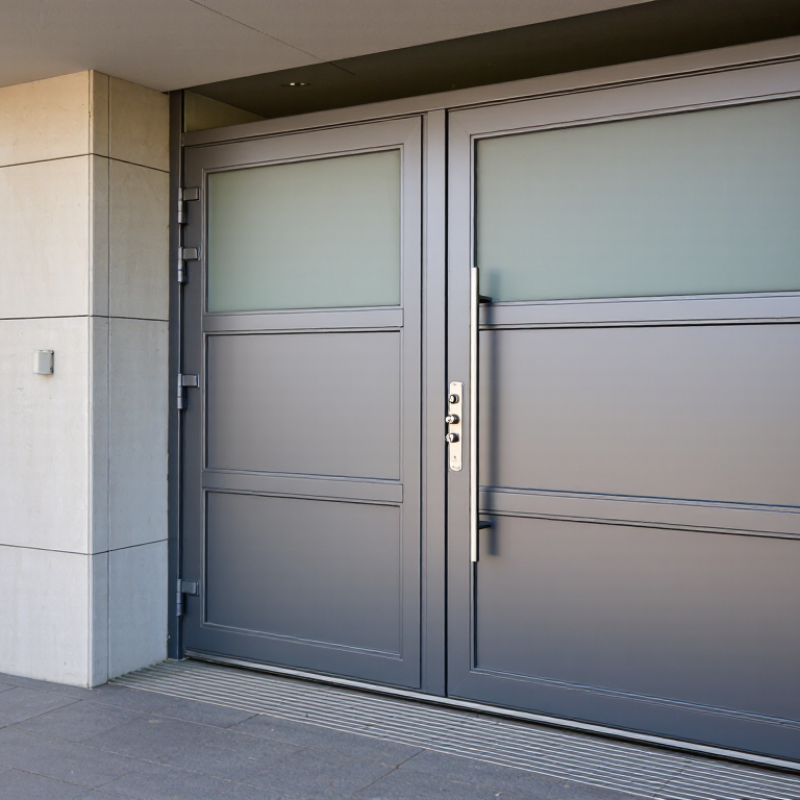
How to Choose the Best Aluminium Entrance Door?

Define Your Entrance Door Needs and Priorities

How to Choose the Best Aluminium Entrance Door?

Define your entrance door needs before comparing finishes or handles. Measure the opening, wall thickness, threshold height, and swing direction. A practical site check can reveal uneven floors, wind exposure, or drainage problems. These details affect sealing and daily comfort.

Energy performance deserves careful attention. The U.S. Department of Energy reports that windows can cause 25–30% of residential heating and cooling energy use. A well-designed aluminium door should include thermal breaks, insulated panels, and low-emissivity glazing where suitable. The International Energy Agency’s 2023 Global Status Report states that buildings consume about 30% of global final energy. Your door is only one element, but weak insulation can still create a cold strip near the entrance. Small detail, noticeable result.

Set priorities around climate, security, maintenance, and access. In coastal areas, ask for corrosion-resistant finishes and suitable drainage. In busy homes, choose durable hinges, replaceable seals, and an easy-to-clean surface. Check tested air, water, and wind performance under relevant standards, such as EN 14351-1. Multi-point locking may improve resistance, but installation quality matters just as much. I have seen attractive doors fail because the frame was poorly aligned. That is worth questioning. Avoid choosing glass area or colour before confirming thermal, acoustic, and safety requirements.

Compare Aluminium Door Styles, Materials, and Construction

Choosing an aluminium entrance door starts with style, but construction decides long-term performance. A slim glazed door brings daylight and a lighter appearance. A solid panel offers stronger privacy and a heavier visual character. Pivot doors create a dramatic opening, while hinged doors usually provide simpler sealing and maintenance.

Compare the frame before judging the finish. Aluminium is stable, corrosion-resistant, and recyclable. The International Aluminium Institute reports that recycled aluminium needs about 5% of the energy used for primary production. However, aluminium conducts heat easily. Choose thermally broken frames, insulated panels, compression seals, and properly drained thresholds. A low U-value can still disappoint if installation leaves gaps. The U.S. Department of Energy notes that windows can cause 25–30% of residential heating and cooling energy use, especially through glass and air leakage. A glazed entrance door deserves similar scrutiny.

Tips: Check tested U-values, air leakage, water resistance, and wind-load results. Review testing under EN 14351-1 or NFRC procedures. Measure the opening twice. Ask how hinges, locks, seals, and drainage are replaced. Dark finishes may absorb more solar heat. That detail is easy to overlook. My practical caution is simple: impressive drawings do not prove durable construction. Inspect corner joints, gasket continuity, and threshold height before ordering. A beautiful door can still feel cold, noisy, or difficult to operate when those details are weak.

How to Choose the Best Aluminium Entrance Door? - Compare Aluminium Door Styles, Materials, and Construction

Comparison Criteria Single Hinged Door Double Hinged Door Pivot Door Aluminium-Framed Glass Door
Typical Configuration One active leaf with side hinges, usually opening inward or outward. Two hinged leaves, often with one active leaf and one secondary leaf. Large leaf rotating on concealed floor and head pivots rather than side hinges. Aluminium frame combined with a large glazed panel or multiple glass panels.
Common Clear Opening Approximately 800–1,000 mm wide and 2,000–2,400 mm high, depending on local regulations and system design. Approximately 1,400–2,000 mm wide and 2,000–2,400 mm high. Often 1,000–1,800 mm wide and up to about 3,000 mm high when engineered for the size and weight. Approximately 800–1,600 mm wide and 2,000–2,800 mm high, depending on the glazing design.
Visual Style Practical and versatile; suitable for traditional, contemporary, and minimalist façades. Grand and symmetrical; creates a wider ceremonial entrance. Architectural and statement-making, with a clean appearance and wide uninterrupted surface. Light, transparent, and modern; maximizes daylight and exterior visibility.
Frame Material Powder-coated or anodized aluminium profiles with reinforced hinge and lock zones. Aluminium profiles with stronger hinges, meeting stiles, and a multi-point locking arrangement. Heavy-duty aluminium profiles with engineered pivot hardware and reinforced structural zones. Thermally improved aluminium profiles designed to support insulated safety glazing.
Thermal Construction Good
Choose a thermally broken frame, insulated door panel, insulated threshold, and low-emissivity double glazing where glass is used.
Good
The larger perimeter and meeting-stile area require careful weather seals and accurate installation.
Good
Thermal performance depends strongly on the pivot hardware, perimeter seals, panel thickness, and threshold design.
Very Good
Best results generally use thermally broken profiles and sealed double or triple insulating glass units.
Indicative Whole-Door U-Value About 1.0–2.0 W/m²·K for a well-designed insulated aluminium entrance door; actual results vary by size, panel, glass, and threshold. About 1.2–2.2 W/m²·K because the larger opening and central meeting area can increase heat-transfer paths. About 1.2–2.5 W/m²·K; large leaf sizes and specialized pivot zones may affect the final tested value. About 1.0–1.8 W/m²·K with thermally broken profiles and high-performance insulating glazing.
Glazing Options Opaque insulated panel, decorative glass, laminated glass, or insulated double glazing. Decorative or laminated safety glass, insulated glazing, or a combination of glazed and opaque panels. Large laminated, toughened, or laminated-insulating glass panels; glass thickness must match the engineered design. Double or triple insulating glass units, low-emissivity coatings, solar-control coatings, and laminated security glass.
Security Potential High
Can accommodate a multi-point lock, reinforced keep area, security cylinder, and laminated safety glass.
High
Requires secure meeting-stile hardware, top and bottom bolts, and correct alignment of both leaves.
Good to High
Security depends on the pivot lock, anti-lift protection, reinforced frame, and resistance-tested hardware.
Good
Use laminated safety glass, a multi-point lock, reinforced profiles, and certified hardware where required.
Weather Resistance Very Good
Continuous compression seals, a properly drained threshold, and professional installation provide reliable protection.
Good
The central joint creates an additional sealing challenge compared with a single-leaf door.
Good
Requires carefully designed seals and drainage around the pivot and threshold areas.
Good
Performance depends on glazing gaskets, drainage paths, frame joints, and exposure conditions.
Accessibility Considerations Usually the easiest style to configure with a low or flush threshold and a suitable clear opening. Can provide a wide opening, but the inactive leaf, threshold, and operating force need careful coordination. May require higher operating force or specialist hardware; verify accessibility requirements before selection. Can be accessibility-friendly with a low threshold, adequate clear width, and correctly adjusted door closers.
Space Requirement Needs clear swing space inside or outside, depending on the handing and opening direction. Needs a larger swing area, although both leaves can improve moving access through the entrance. Needs clearance around the rotation path on both sides; furniture and walls must not obstruct the leaf. Needs swing clearance unless specified as a sliding or folding alternative.
Maintenance Low
Clean frames and glass periodically; inspect seals, hinges, lock operation, and drainage openings.
Low to Moderate
Check both leaves, meeting-stile seals, bolts, hinges, and alignment more frequently.
Moderate
Pivot hardware and closer adjustment may require periodic inspection by a qualified technician.
Low
Clean glass and profiles, keep drainage channels clear, and inspect gaskets and hardware.
Expected Durability High
Aluminium does not rot or warp like untreated timber, but hardware and seals are replaceable wear components.
High
Durability depends on leaf weight, hinge capacity, threshold design, and regular hardware adjustment.
High
Requires correctly sized pivot hardware and a stable supporting structure for the large leaf.
High
Durable when the frame, glazing, seals, and hardware are selected for the site's wind and exposure conditions.
Relative Cost Medium
Generally the most cost-efficient option for a standard residential entrance.
Medium to High
Additional leaf, hardware, seals, and structural requirements increase material and installation costs.
High
Large panels, specialist pivot hardware, structural support, and installation typically increase the budget.
Medium to High
Cost varies with glass specification, frame depth, panel size, coatings, and security requirements.
Best Choice For Most homes, compact entrances, renovations, and projects prioritizing balanced cost, security, and thermal efficiency. Wide façades, formal entrances, large furniture access, and buildings requiring a symmetrical doorway. Contemporary architectural entrances where appearance and a large opening are more important than budget. Homes and commercial spaces seeking natural light, visibility, and a modern aluminium-and-glass appearance.
Technical note: Performance figures are indicative ranges for typical aluminium entrance-door systems. Final U-value, air tightness, water tightness, wind resistance, security classification, and accessibility performance must be confirmed from the tested product specification and local building regulations.

Evaluate Thermal Performance, Security, and Weather Resistance

How to Choose the Best Aluminium Entrance Door?

Evaluate Thermal Performance, Security, and Weather Resistance

A quality aluminium entrance door should reduce heat loss without feeling heavy or difficult to operate. Check the complete door-set U-value, not only the frame rating. Thermal breaks inside the aluminium profile limit cold bridging. Low-emissivity glazing can improve comfort near the entrance. Ask for test data from an independent laboratory.

Security depends on the whole system. Look for a strong frame, a protected cylinder, and a tested multipoint locking mechanism. Laminated glass can delay forced entry when glazing is included. Hinges should resist lifting, while fixings must connect securely with the surrounding wall. A beautiful lock means little if installation is weak.

Weather resistance shows up during real storms. Check certified results for air permeability, water penetration, and wind-load performance. The threshold should include a reliable seal and clear drainage paths. On site, tiny gaps around the frame often cause drafts and damp patches. I once focused too much on the door panel and overlooked the threshold. That mistake changed my inspection routine. Measure the opening carefully, review the installer’s method, and confirm maintenance requirements for seals, drainage, and surface finishes. Good performance is tested, installed, and checked—not simply advertised.

Select Suitable Sizes, Glazing, Hardware, and Finishes

How to Choose the Best Aluminium Entrance Door?

Select Suitable Sizes, Glazing, Hardware, and Finishes

Accurate measurements are the starting point for a reliable aluminium entrance door. Measure the opening at several points, including width, height, and diagonals. Small differences can cause difficult installation later. I usually allow space for seals, frame movement, and a level threshold. A wide doorway may look impressive, but it can need stronger hinges and careful alignment. Check local building requirements before ordering.

Glazing affects comfort, privacy, and security. Low-emissivity double glazing can reduce heat loss in colder rooms. Laminated glass helps hold broken pieces together, while textured glass softens views from the street. Clear glass brings in more daylight, yet it may expose your hallway at night. That trade-off is easy to miss. Ask for the glass specification, not only a performance label.

Hardware should feel solid during daily use. Choose hinges, locks, handles, and closers that match the door’s weight and traffic level. A heavy handle can feel luxurious, but it may not suit every user. Test the action before installation. Finishes also deserve practical thought. Powder-coated surfaces offer many colours and usually need simple cleaning. Dark finishes can show dust and fingerprints quickly. I once preferred a dramatic matte finish, then reconsidered it after seeing afternoon marks near the handle. Samples viewed outdoors often look different from showroom panels. That detail matters.

How to Choose the Best Aluminium Entrance Door?

Compare glazing options first, then match the door size, hardware, and finish to the building’s performance and daily-use requirements.

Suitable Sizes

Common single-leaf entrance doors are approximately 800–1,000 mm wide and 2,000–2,400 mm high. Wider openings may require double leaves or a side panel.

Glazing Choice

Double low-emissivity glazing is a practical balance for many entrances. Triple glazing can reduce heat transfer further where energy performance is a priority.

Hardware

Select hinges, locks, closers, and panic hardware according to door weight, traffic level, accessibility needs, and applicable safety regulations.

Finishes

Powder coating and anodising are commonly used aluminium finishes. Choose a colour and surface treatment suitable for the exposure and maintenance plan.

Typical centre-of-glass Ug values shown for comparison: single clear glazing ≈ 5.7 W/m²K, double low-emissivity glazing ≈ 1.1 W/m²K, and triple low-emissivity glazing ≈ 0.6 W/m²K. Actual door performance depends on the frame, spacer, seals, size, and installation.

Check Installation Standards, Maintenance Needs, and Warranty Terms

Choosing the best aluminium entrance door begins with installation standards, not appearance. Ask whether the installer follows local building regulations and the manufacturer’s technical instructions. The frame should be plumb, level, and securely fixed to the surrounding wall. Check details for air leakage, water drainage, wind resistance, and safe threshold height. Request written evidence of tested performance where available. A small fitting error can cause drafts, standing water, or difficult locking.

Aluminium usually needs little maintenance. Still, inspect seals, hinges, locks, and drainage openings twice a year. Wipe the frame with mild soapy water and a soft cloth. Avoid abrasive cleaners. Moving parts may need suitable lubricant, but too much can attract dust. Coastal air requires closer checks because salt can affect fittings and finishes. I once saw a well-installed door fail early because its drainage channels were blocked by grit. The problem was simple, but easy to miss.

Read the warranty before paying the final balance. Check its duration, coverage, exclusions, and response process. Some terms cover the frame but exclude glass, hardware, finishes, or installation faults. Ask whether an approved installation record is required. Keep the contract, invoices, maintenance notes, and photographs. A long warranty sounds reassuring, but unclear wording weakens it. I would choose transparent terms over impressive promises, even if the door costs slightly more. That choice feels less exciting. It is usually easier to defend later.

FAQS

Which aluminium door style suits a brighter entrance?

A slim glazed door admits more daylight and looks lighter. Check glass insulation and air leakage carefully. Appearance can mislead.

Is a solid-panel door better for privacy?

Yes, solid panels provide stronger privacy and a heavier visual character. They may reduce daylight inside the entrance.

What is the difference between pivot and hinged doors?

Pivot doors create a dramatic opening. Hinged doors usually seal and operate more simply. I would not choose drama over reliable sealing.

What frame features improve thermal performance?

Choose thermally broken frames, insulated panels, compression seals, and properly drained thresholds. Aluminium transfers heat easily. Details matter.

What performance tests should buyers request?

Ask for tested U-values, air leakage, water resistance, and wind-load results. Review recognized testing procedures. Drawings alone prove very little.

How should the opening be measured before ordering?

Measure the opening twice, including width, height, and threshold conditions. Record uneven walls or gaps. One measurement can be wrong.

What installation details deserve close inspection?

The frame should be plumb, level, and securely fixed. Check gasket continuity, corner joints, drainage, and threshold height. Small errors create drafts.

How often should an aluminium entrance door be maintained?

Inspect seals, hinges, locks, and drainage openings twice yearly. Clean with mild soapy water and a soft cloth. Avoid abrasive cleaners.

Does coastal air change maintenance requirements?

Yes, salt air can affect fittings and finishes. Inspect coastal doors more often. Blocked drainage can cause early failure.

What should a door warranty clearly explain?

Check duration, coverage, exclusions, and response procedures. Confirm whether glass, hardware, finishes, or installation faults are excluded. A long warranty may still be weak.

Conclusion

Choosing the best Aluminium Entrance Door starts with clearly defining your priorities, including appearance, energy efficiency, security, durability, and budget. Consider how the door will be used, the level of exposure to weather, and the architectural style of your property. Compare different door designs, aluminium grades, frame structures, and construction methods to find a balance between strength, performance, and visual appeal.

Pay close attention to thermal insulation, locking systems, glazing options, weather resistance, and overall security. Select suitable dimensions, glass types, handles, hinges, colours, and surface finishes to meet both practical and aesthetic requirements. Before making a final decision, confirm that the door will be installed according to relevant standards and that the installer has the necessary experience. Also review cleaning requirements, expected maintenance, warranty coverage, and after-sales support. A carefully selected Aluminium Entrance Door can improve comfort, security, energy performance, and the long-term value of your property.

Mason

Mason

Mason is a seasoned marketing professional with a deep expertise in the company's offerings and a passion for driving brand awareness. With a strong background in digital marketing strategies, he has an innate ability to connect with diverse audiences and effectively communicate product benefits.......