How to Choose a Modern Aluminum Entry Door?

Time:2026-10-25 Author:Madeline
0%

Choosing a Modern Aluminum Entry Door involves more than matching a clean frame with a stylish façade. It requires careful attention to security, insulation, durability, and daily comfort. In practical installations, aluminum performs well because it resists warping, moisture, and heavy use. However, not every aluminum door offers the same protection or value. Measure the opening accurately. Small errors create expensive problems. Check the frame depth, threshold design, hinges, locking system, and weather seals. Look for tested thermal performance and reliable hardware from established manufacturers. A professional installer should also explain drainage, adjustment, and maintenance requirements clearly.

This guide explores how to compare door construction, glazing, finishes, security features, and installation quality. Glass selection matters, especially when the entrance faces strong sunlight or a busy street. A thermally broken frame can reduce heat transfer, while multi-point locks may improve resistance against forced entry. Still, stronger specifications can increase cost and may not suit every home. No choice is perfect. I have seen attractive doors disappoint because their seals failed or their thresholds collected water. That detail is easy to miss. Consider your climate, entrance orientation, household habits, and long-term repair access. Request written performance information, warranty terms, and installation details before ordering. A dependable decision balances appearance with measurable performance, not marketing language alone. With the right questions, a Modern Aluminum Entry Door can provide a secure, efficient, and refined entrance for many years.
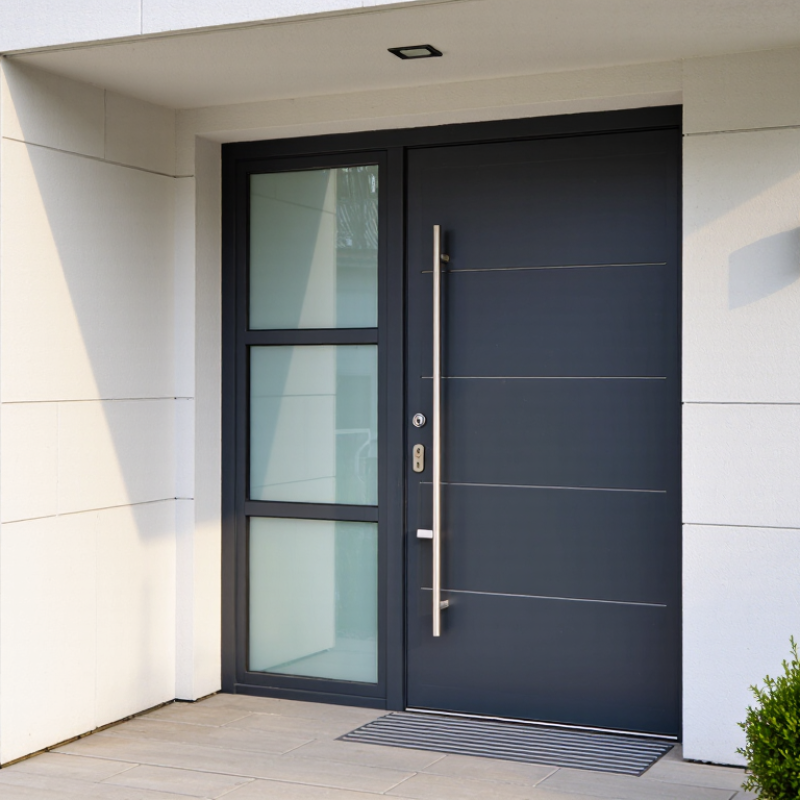
How to Choose a Modern Aluminum Entry Door?

Define Performance Goals Using NFRC U-Factor and SHGC Ratings

Choosing a modern aluminum entry door starts with measurable performance, not appearance. The National Fenestration Rating Council (NFRC) label reports U-Factor and Solar Heat Gain Coefficient (SHGC). U-Factor measures heat transfer through the complete door assembly. Lower values indicate better insulation. SHGC measures the solar heat entering through glazed areas. Lower values usually suit hot, sunny climates.

The U.S. Department of Energy reports that windows can cause 25–30% of household heating and cooling energy use. A glazed aluminum door can add to that load, especially near west-facing walls. Look for a thermally broken frame, insulated core, and properly sealed glass edge. Then compare the NFRC-rated assembly, not only the center panel. A low U-Factor can still perform poorly if installation leaves gaps. That detail is easy to miss.

Tips: Match SHGC to climate and orientation. Choose lower SHGC for strong afternoon sun. In colder regions, moderate solar gain may help. Check the tested U-Factor for the entire door. Ask for installation details, weatherstripping type, and sill drainage. Do not assume triple glazing always wins; frame design and air leakage can change the result. I would also inspect the threshold after rain. Small drafts often reveal bigger installation problems. Recheck your priorities before ordering.

Compare Thermal Breaks and Target an NFRC U-Factor Near 0.30

How to Choose a Modern Aluminum Entry Door?

A modern aluminum entry door should be judged by its whole-door U-factor, not frame material alone. NFRC defines U-factor as heat flow through a product, measured in Btu/(h·ft²·°F). Lower numbers indicate better insulation. Target a certified U-factor near 0.30 for a strong balance of efficiency and design flexibility. Ratings must include the slab, frame, glass, and hardware.

Thermal breaks matter most at the frame. They separate interior and exterior aluminum with a low-conductivity isolator, often reinforced polymer. Without this barrier, the frame can become cold, create interior condensation, and reduce comfort near the threshold.

The U.S. Department of Energy identifies high-performance frames, low-emissivity glazing, and proper installation as key envelope strategies. NFRC certification offers a reliable comparison because it uses standardized testing. Still, a 0.30 rating is not a guarantee of low energy bills. Orientation, weather, installation quality, and indoor humidity also matter.

Tips:

Ask for the NFRC label. Confirm the rating is for the complete door unit. Compare doors at the same size. Inspect the thermal break through profile drawings. Check the sill for drainage and an adjustable seal. A high rating can disappoint if the installer leaves gaps around the frame. I have seen this overlooked. That detail deserves more attention. Condensation risk also deserves review in cold climates; local design conditions can change the decision.

(Sources: NFRC Product Certification Program; U.S. Department of Energy Building Technologies Office.)

Specify Air Infiltration of ≤0.3 cfm/ft² Under ASTM E283 Testing

How to Choose a Modern Aluminum Entry Door?

A modern aluminum entry door should be judged by tested air performance, not appearance alone. Specify air infiltration of ≤0.3 cfm/ft² under ASTM E283 testing. The pressure level must be stated clearly. Otherwise, the number lacks useful context.

That detail matters on a windy entrance. Poorly sealed doors can create cold drafts, rattling weatherstrips, and higher conditioning loads. The U.S. Department of Energy reports that air sealing can reduce annual heating and cooling costs by 10–20%. ASTM E283 measures leakage through door assemblies, including joints, seals, and frame interfaces. It does not predict every installation condition.

Ask for a complete laboratory report, not a brochure claim. Check the tested door size, pressure, specimen configuration, and weatherstrip arrangement. A sill with drainage paths may perform differently from a sealed interior threshold. Installation remains critical. Small gaps around the frame can defeat a strong laboratory result. Field workmanship is often the weak link. Consider independent air-sealing inspection before finish trim hides the perimeter. A stricter specification is useful, but it should also identify tolerances, installation details, and retesting procedures.

Evaluate Security Hardware Against AAMA/FGIA Performance Standards

When choosing a modern aluminum entry door, examine the complete hardware system, not only the lock cylinder. A strong-looking handle can still fail if the strike plate is shallow or poorly anchored. FGIA’s NAFS-22 standard evaluates air leakage, water penetration, structural performance, and operation. Its performance-grade system moves beyond appearance. Residential doors often carry lower design-pressure ratings, while commercial-grade assemblies require higher tested loads. Ask for the certified performance grade and design pressure.

Security hardware needs separate evidence. AAMA 1304 evaluates forced-entry resistance for side-hinged door systems, including the frame, hinges, lock, and surrounding connections. The test is assembly-based. One upgraded deadbolt cannot compensate for weak screws or a flexible jamb. ANSI/BHMA A156.36 classifies auxiliary locks from Grade 1 through Grade 3, with Grade 1 representing the more demanding category. Still, grade labels do not replace project-specific testing.

Inspect the door at eye level. Check whether the strike plate uses long fasteners reaching structural framing. Confirm that hinges remain aligned after repeated operation. The 2022 NAFS standard also requires operational testing, but real installation quality can differ sharply. I have seen excellent hardware underperform because the threshold was uneven. That detail is easy to miss. Request test reports, installation instructions, and hardware compatibility data before approval. A higher rating is helpful, not magical. Review the weak link.

How to Choose a Modern Aluminum Entry Door?

Evaluate Security Hardware Against AAMA/FGIA Performance Standards

The chart uses Performance Grade design pressures of PG 40, PG 50, and PG 70. Under AAMA/WDMA/CSA 101/I.S.2/A440 evaluation practices, the reference water-penetration pressure is 15% of design pressure, while the structural test pressure is 1.5 times design pressure. Select locks, hinges, fasteners, and strike plates that remain secure when tested as part of the complete door assembly.

Values shown are calculated reference pressures in pounds per square foot (psf); the actual certified rating depends on the complete tested door system, size, glazing, installation, and hardware configuration.

Verify Finish Durability, Glazing, and ASTM E2112 Installation Compliance

Choosing a modern aluminum entry door begins with checking finish durability, not just appearance. A smooth sample may look impressive under showroom lighting. Outdoor exposure is less forgiving.

Ask how the finish resists ultraviolet light, moisture, abrasion, and temperature changes. Confirm the testing method, performance rating, and maintenance instructions. Powder-coated or anodized surfaces can perform well, but preparation and application still matter. Inspect corners, edges, screw areas, and the threshold for thin coverage. Small defects often become obvious after installation.

Glazing deserves equal attention. Select insulated glass with suitable safety characteristics for the location. Check the glass type, spacer construction, seal quality, and drainage path around the panel. A decorative insert may reduce daylight more than expected. It may also change the door’s weight and operating feel. Request documented performance data, rather than relying on vague claims. Clear glass is not automatically the best choice.

Installation must follow the door manufacturer’s instructions and the applicable ASTM E2112 practice. Verify rough-opening dimensions, sill pan details, flashing transitions, fastener placement, shimming, and perimeter sealing. The surrounding wall system matters. A good door can still leak when the opening is poorly prepared. On site, installers should photograph hidden flashing before closing the trim. It sounds excessive. It prevents arguments later. Even a careful checklist can miss uneven framing or an incorrectly compressed gasket, so inspect operation after fastening and again after sealants cure.

FAQS

What U-factor should a modern aluminum entry door target?

Target a certified whole-door U-factor near 0.30. Lower values generally indicate better insulation. The rating should include the slab, frame, glass, and hardware.

Why is a thermal break important in an aluminum door frame?

It separates indoor and outdoor aluminum with a low-conductivity isolator. This reduces cold frame surfaces and condensation risk. Comfort improves near the threshold.

Does a 0.30 U-factor guarantee lower energy bills?

No. Orientation, weather, installation quality, and indoor humidity also affect performance. The rating helps comparison, but it is not a promise.

How can buyers verify a door’s insulation rating?

Ask for the complete certification label. Confirm the rating applies to the entire door unit. Compare doors tested at the same size.

What air-infiltration level should be specified?

Specify no more than 0.3 cfm/ft² under ASTM E283 testing. The test pressure must be stated. Without pressure details, the result lacks context.

Why does air leakage matter at an entry door?

Poor seals can create cold drafts and rattling weatherstrips. They may also increase heating and cooling loads. Windy entrances reveal weak sealing quickly.

What should a complete air-performance report show?

Check the tested door size, pressure, specimen configuration, and weatherstrip arrangement. Ask for laboratory results, not only brochure language. Small gaps still matter.

What should buyers inspect around the sill and frame?

Look for drainage paths and an adjustable seal at the sill. Review the thermal break in profile drawings. Inspect perimeter gaps before finish trim hides them.

Can installation reduce the value of a highly rated door?

Yes. Poor workmanship can defeat a strong laboratory result. An independent air-sealing inspection may expose hidden gaps. This detail is often overlooked.

Conclusion

Choosing a Modern Aluminum Entry Door starts with defining clear performance goals for comfort, energy efficiency, and long-term reliability. Use NFRC ratings to compare U-Factor and SHGC, selecting a design that suits the building’s climate and daylight needs. Pay close attention to the thermal break, and aim for an NFRC U-Factor near 0.30 when appropriate. A well-designed frame and sealed assembly should also achieve air infiltration of no more than 0.3 cfm/ft² when tested under ASTM E283.

Security and durability are equally important. Evaluate locks, hinges, multipoint systems, and other hardware against applicable AAMA/FGIA performance standards rather than relying on appearance alone. Confirm that the finish resists weathering, that the glazing provides the desired insulation and safety characteristics, and that drainage and sealing details are properly designed. Finally, verify that installation follows ASTM E2112 guidance, including correct flashing, shimming, fastening, and perimeter sealing. These checks help ensure the finished door performs reliably while maintaining its appearance and protective function.

Madeline

Madeline

Madeline is a dedicated marketing professional with a wealth of expertise in our company's core offerings. With a keen understanding of the industry, she brings a unique perspective to her role, consistently delivering high-quality content that highlights the superior aspects of our products. As......