China Top 10 Aluminium Entry Door Manufacturers

Time:2026-09-30 Author:Ethan
0%

China’s Aluminium Entry Door industry combines large-scale production with increasingly precise architectural demands. The International Aluminium Institute reported that China produced about 41.3 million tonnes of primary aluminium in 2023. That scale matters. It supports broad material access, competitive pricing, and fast customization.

Yet volume does not guarantee a reliable door. The IEA’s Buildings report notes that buildings consume roughly 30% of global final energy. A poorly sealed entrance can turn a bright hallway into a cold draft zone. Therefore, this guide examines China’s top 10 Aluminium Entry Door manufacturers through practical criteria. These include profile quality, thermal-break design, air leakage, water resistance, hardware, testing, warranty service, and export experience.

Dr. Wolfgang Feist, founder of the Passivhaus Institute, has said, “A passive house is not a thermos flask.” The point is useful here. A high-performing door needs balanced ventilation, glazing, seals, and installation. Not insulation alone.

The selection also considers EN 14351-1, ISO 10077-1, ASTM E283, and relevant AAMA testing practices. Manufacturer brochures can look impressive. Factory evidence matters more. Buyers should request test reports, alloy grades, coating specifications, corner-joint details, and installation drawings. Some suppliers may describe thermal performance too confidently. That deserves scrutiny.

This introduction is not a final verdict. Regional climate, building codes, budget, and project scale can change the ranking. A coastal villa needs different protection than a dry inland residence. The following manufacturers are assessed with those real-world differences in mind.
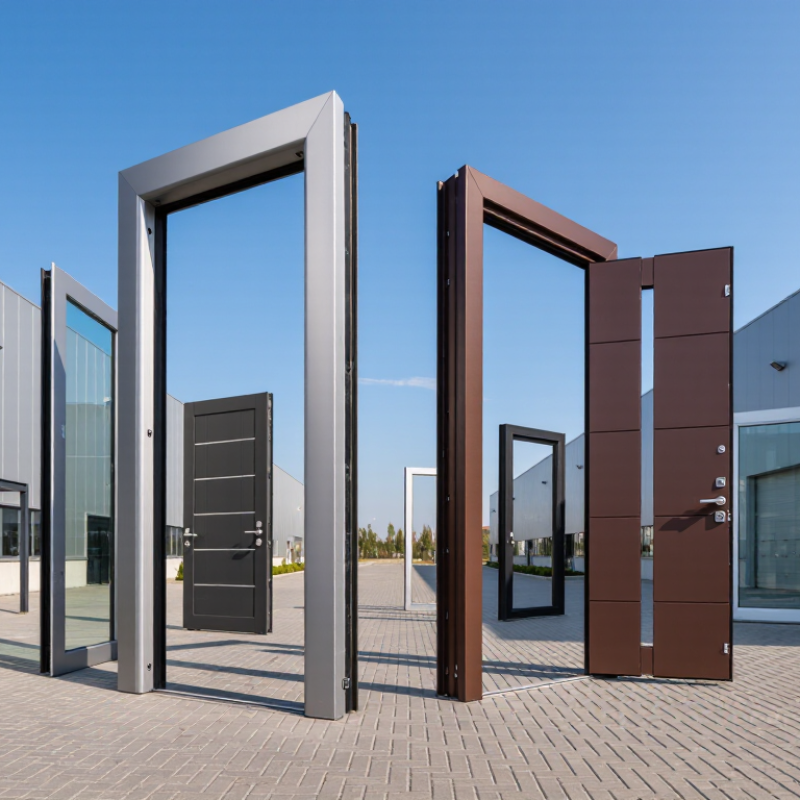
China Top 10 Aluminium Entry Door Manufacturers

Defining the China Top 10 Aluminium Entry Door Manufacturers

Defining the China Top 10 Aluminium Entry Door Manufacturers requires more than comparing online catalogs. A credible selection should examine factory experience, engineering capability, material control, and documented project performance. Manufacturers deserve attention when they produce aluminium profiles consistently, use reliable surface treatments, and test doors for water resistance, air tightness, wind pressure, and repeated opening cycles. Real experience matters. A factory visit can reveal cleaner assembly areas, organized storage, and realistic production schedules.

The strongest manufacturers usually support thermal-break design, custom dimensions, secure hardware, and different architectural finishes. They should provide clear drawings, sample approval, inspection records, and practical installation guidance. Communication is also important. Fast replies are useful, but accurate answers matter more. Buyers should compare warranty terms, replacement procedures, packaging quality, and export experience before making a decision. Low prices may hide weaker hardware or limited service. That risk deserves attention.

Tips: Request a complete specification sheet and a recent project reference. Ask how the door performs in strong rain, coastal air, or extreme temperatures. Check whether factory testing matches your local requirements. A short video call with production staff can expose gaps between marketing and actual capability. Do not rank manufacturers by appearance alone.

A top-ten list is never perfect. Product quality can vary between projects, and even experienced suppliers may make mistakes. Rechecking samples, drawings, and inspection results remains necessary. This approach creates a more dependable definition of China’s leading aluminium entry door manufacturers.

China Top 10 Aluminium Entry Door Manufacturers - Defining the China Top 10 Aluminium Entry Door Manufacturers

An anonymized comparison of representative manufacturing capabilities, product specifications, quality systems, and export services.

Comparative Manufacturer Capability Table
Rank Anonymous Manufacturer Profile Primary Manufacturing Region Typical Door Construction Thermal Break Options Glazing Compatibility Surface Finishes Quality and Testing Focus Customization Capability Typical Production Lead Time Best-Fit Project Type
1 Profile A — Premium Export Specialist Pearl River Delta Insulated aluminium frame; single, double, and pivot entry-door formats Polyamide thermal-bar systems available Single, laminated, double, and triple insulating glass Powder coating, anodizing, wood-effect finish Dimensional inspection, coating checks, water and air-sealing verification High; custom sizes, colors, hardware, and panel designs 30–45 days after drawing approval Luxury residential and villa developments
2 Profile B — Large-Format Door Manufacturer Pearl River Delta Heavy-duty aluminium panels with reinforced stiles and rails Thermally improved and non-thermal systems Large laminated and insulating glass units Exterior-grade powder coating and anodized finishes Load, alignment, hardware operation, and weather-sealing checks High; oversized openings and concealed hardware options 35–50 days after technical confirmation Contemporary villas and architectural residences
3 Profile C — High-Volume Project Supplier Yangtze River Delta Standardized aluminium entrance-door series for repeated project use Thermal-break and standard aluminium options Single and double insulating glass; laminated safety glass Powder coating and anodizing in common architectural colors Batch consistency, profile dimensions, color matching, and packaging checks Medium to high; optimized for repeatable specifications 25–40 days for standard configurations Apartment, townhouse, and multi-unit developments
4 Profile D — Energy-Efficient Door Specialist Fujian and coastal manufacturing areas Insulated aluminium frame with multi-chamber sealing systems Polyamide thermal breaks and insulated thresholds Low-emissivity double and triple insulating glass Powder coating, anodized aluminum, and textured finishes Thermal-performance calculations, air leakage, and water resistance Medium; performance-led configurations with selected options 35–55 days depending on glazing and hardware Energy-conscious residential construction
5 Profile E — Security Entry-Door Producer Central and eastern China Reinforced aluminium leaf with multi-point locking preparation Thermal-break frame systems available Laminated, tempered, and insulating safety glass Powder coating, anodizing, and decorative panel treatments Lock alignment, hinge load, impact resistance, and operational testing High; security hardware, access control preparation, and panel layouts 30–50 days after hardware approval Main entrances requiring enhanced security
6 Profile F — Design-Focused Custom Fabricator Pearl River Delta Slim-profile frames, flush panels, and bespoke decorative elements Thermally improved slim-frame options Clear, tinted, frosted, laminated, and insulating glass Custom powder colors, anodized finishes, and wood-effect surfaces Prototype approval, finish samples, dimensional control, and fit testing Very high; suitable for one-off and architect-designed doors 40–60 days for highly customized orders Boutique homes and design-led projects
7 Profile G — Mid-Market Standard-Series Supplier Shandong and northern manufacturing areas Practical aluminium frames with standard panel and glass combinations Standard and thermally improved frame choices Single glass, laminated glass, and double insulating glass Standard powder-coated and anodized colors Incoming material checks, assembly inspection, and packaging control Medium; selection based on established product series 25–40 days for standard orders Budget-conscious residential projects
8 Profile H — Commercial and Institutional Supplier Yangtze River Delta Durable aluminium entrance systems for frequent-use environments Thermal-break and heavy-duty non-thermal systems Tempered, laminated, and insulating safety glazing Powder coating and anodized finishes for commercial use Cycle testing, hardware durability, alignment, and safety checks Medium to high; supports access-control and panic-hardware preparation 35–50 days depending on project volume Offices, schools, hotels, and public buildings
9 Profile I — Regional OEM and Private-Label Supplier Southern and southwestern China OEM-compatible aluminium doors based on buyer drawings and specifications Selected thermal-break systems according to project requirements Common architectural glass configurations Powder coating, anodizing, and buyer-specified finishes Drawing review, sample approval, batch inspection, and export packaging High for buyer-specified designs and packaging requirements 30–50 days after sample confirmation Importers, distributors, and private-label programs
10 Profile J — Small-Batch Architectural Workshop Coastal and regional production centers Hand-finished aluminium doors for individual openings and renovation work Available where required by climate or project specification Laminated, tempered, and double insulating glass Powder coating, anodizing, and custom decorative finishes Manual assembly inspection, fit checks, finish review, and protective packaging Very high for small quantities and unusual dimensions 40–65 days depending on design complexity Renovation, custom homes, and limited-volume projects
Evaluation note: The profiles are anonymized to avoid displaying company names or brand-related data. Lead times, construction types, finishes, and testing categories represent commonly documented manufacturing practices and market benchmarks for aluminium entry-door production in China; final specifications should be verified through technical drawings, samples, inspection records, and project quotations.

Ranking Criteria for Evaluating Aluminium Entry Door Manufacturers

China Top 10 Aluminium Entry Door Manufacturers

Ranking aluminium entry door manufacturers requires more than comparing website images. A reliable evaluation starts with material quality, production experience, and verified project performance. Check alloy specifications, frame thickness, thermal-break design, and hardware durability. Numbers need context. A thicker frame is not always better if machining accuracy is poor.

Testing should examine air leakage, water resistance, wind pressure, sound reduction, and repeated opening cycles. Review independent test reports, factory quality records, and installation guidance. Ask whether results match the actual door configuration, including glass, seals, locks, and thresholds. A polished catalog can mislead. Factory visits, sample inspections, and customer references provide stronger evidence than advertising claims.

A practical ranking also considers customization, lead times, packaging, warranty terms, and after-sales communication. Manufacturers serving overseas projects should understand applicable building codes and documentation requirements. Assess their response to damaged components or inconsistent finishes. Small details matter. Powder coating should resist visible fading, while corners should remain clean and firmly joined. No scoring model is perfect. Weight each criterion according to the project, because a coastal villa, apartment entrance, and commercial building face different risks. A manufacturer with advanced equipment may still struggle with service consistency, so published capacity deserves careful verification.

Profiles of China’s Leading Aluminium Entry Door Manufacturers

China’s leading aluminium entry door manufacturers reflect the country’s strong materials base. The International Aluminium Institute reported about 41.5 million tonnes of Chinese primary aluminium production in 2023. That represented nearly 59% of global output. This scale supports competitive extrusion, machining, and surface-finishing capacity.

A useful Top 10 profile should examine more than factory size. Leading manufacturers usually offer insulated thermal-break profiles, multi-point locking systems, powder coating, anodising, and customised dimensions. Buyers should also check test evidence for air permeability, water tightness, wind resistance, and heat transfer. China’s GB/T 8478-2020 standard provides a relevant reference for building doors and windows. However, compliance claims still need independent verification. That part is often overlooked.

Tips: Request section drawings, coating specifications, hardware brands, and recent test reports. Confirm whether testing covered the complete door assembly, not only the aluminium profile. Ask for production photographs and sample corners. A polished catalogue proves little. Factory audits, installation guidance, and warranty terms reveal more. The strongest manufacturers also explain lead times clearly and identify limits in custom designs. Rankings can be imperfect because export records, product quality, and after-sales performance are not measured equally. That is why these profiles should support due diligence, not replace it.

Comparing Products, Certifications, Pricing, and Export Capabilities

China’s leading aluminium entry door manufacturers differ widely in design, testing, and export readiness. Their product ranges often include thermal-break doors, non-thermal systems, pivot doors, sliding models, and custom entrance units. Some suppliers offer powder coating, wood-grain finishes, laminated glass, multi-point locks, and concealed hinges. Ask for section drawings, glass specifications, hardware brands, and sample corners before comparing prices.

Certification claims need careful checking. Reliable factories usually provide ISO 9001 records, material certificates, and test reports for air permeability, water resistance, wind pressure, and thermal performance. Market requirements vary. A door suitable for Europe may not meet North American testing expectations. Confirm the issuing laboratory, test date, model number, and whether the report covers the quoted configuration. I once compared only certificates and missed the difference between a tested sample and a production door.

Pricing depends on alloy grade, wall thickness, glazing, hardware, finish, order quantity, and packaging. Low quotations may exclude molds, reinforced crates, port charges, or replacement parts. Request a detailed FOB or CIF quotation with clear assumptions. Export-capable manufacturers should explain lead times, container loading, labeling, customs documents, and installation guidance. Check their experience with your destination climate, not just their annual sales claims. A factory may communicate quickly yet struggle with after-sales support. That weakness matters.

How to Select the Right Chinese Aluminium Entry Door Manufacturer

China Top 10 Aluminium Entry Door Manufacturers

Selecting the right Chinese aluminium entry door manufacturer requires more than comparing online prices. In factory visits, I have learned that clean showrooms can hide weak production control. Ask for the aluminium alloy grade, profile thickness, thermal-break details, and coating specifications. Request recent test reports for air leakage, water resistance, wind pressure, and thermal performance. Verify whether an independent laboratory issued them.

Look closely at a production sample. Check the corner joints, hinges, locks, seals, and drainage holes. A door may look attractive but still close unevenly after repeated use. Ask how the factory controls dimensional tolerance during cutting and assembly. Small errors become obvious around a large entrance. Confirm the manufacturer can produce your required sizes, glass types, colors, and opening directions without unexplained substitutions.

Communication is another practical test. Send a detailed drawing and compare the factory’s questions with its quotation. Reliable teams usually clarify wall thickness, installation conditions, packing, lead time, and after-sales responsibilities. Request a pre-production sample and written inspection standards. Do not rely only on promises. A low price can reflect thinner profiles or cheaper hardware. Sometimes, paying more prevents expensive site repairs. I still find this step imperfect, because factory samples may receive extra attention. Independent inspection before shipment remains worth considering.

How to Select the Right Chinese Aluminium Entry Door Manufacturer

A practical 100-point evaluation model for comparing aluminium entry door manufacturers. The weighting prioritizes measurable product performance, manufacturing capability, compliance, and long-term service rather than company size alone.

Use the same evidence requirements for every supplier: tested thermal and weather performance, documented aluminium alloy and coating specifications, quality-control records, applicable certifications, delivery capacity, warranty terms, and after-sales support. Product requirements should be aligned with the destination market and relevant standards.

FAQS

What should define a leading aluminium entry door manufacturer?

Examine factory experience, engineering ability, material control, and documented project performance. Online catalogs are not enough. Factory visits reveal storage, assembly areas, and production discipline.

Which tests should aluminium entry doors pass?

Request reports for air tightness, water resistance, wind pressure, thermal performance, and repeated opening cycles. Check the laboratory, test date, model, and tested configuration.

What product details should buyers compare?

Compare alloy grade, profile thickness, thermal-break design, glazing, hardware, seals, drainage, and surface treatment. Request section drawings and sample corners.

How can buyers inspect a production sample?

Check corner joints, hinges, locks, seals, and drainage holes. Open the door repeatedly. It should close evenly without rubbing or visible gaps.

Why can a low quotation become risky?

It may exclude molds, reinforced packaging, port charges, or replacement parts. Thinner profiles and cheaper hardware may also reduce durability. The cheapest option is not always economical.

What should an export-ready manufacturer explain?

Ask about lead time, container loading, labels, customs documents, packaging, and installation guidance. Confirm experience with your destination climate and local requirements.

How should buyers verify certification claims?

Ask for material certificates and quality records. Confirm the issuing laboratory and report coverage. A certificate may describe a tested sample, not every production door.

Is a factory sample always reliable?

Not completely. Samples may receive extra attention. Independent inspection before shipment can reveal dimensional errors, weak packaging, or missing hardware. This step still feels imperfect, but it matters.

Conclusion

This guide presents a practical overview of China’s top 10 Aluminium Entry Door manufacturers, focusing on the factors that distinguish reliable suppliers in a competitive market. It explains how manufacturers can be evaluated through product quality, material performance, design flexibility, production capacity, certifications, quality-control systems, pricing, lead times, and export experience. The ranking framework is designed to help readers compare suppliers objectively rather than relying only on reputation or promotional claims.

The article also summarizes the typical product ranges, customization services, technical capabilities, and international order support offered by leading manufacturers. It concludes with a step-by-step approach to selecting the right partner, including checking specifications, requesting samples, confirming certification documents, reviewing warranty terms, assessing communication, and comparing total purchasing costs. By considering both product performance and supplier reliability, buyers can make a more informed decision when sourcing an Aluminium Entry Door for residential, commercial, or architectural projects.

Ethan

Ethan

Ethan is a seasoned marketing professional with a deep expertise in our company's innovative product line. With a passion for sharing knowledge and insights, he takes the lead in regularly updating our corporate blog, where he explores industry trends, product features, and effective marketing......