A front entrance sets the tone for a modern home before anyone touches the handle. Clean lines, broad glass panels, and a slim frame can make a hallway feel brighter and more connected to the street. Among today’s options, an Aluminum Front Door offers a practical balance of strength, design flexibility, and weather resistance. It can support oversized panels, concealed hinges, matte finishes, and precise thermal-break systems.
Performance deserves equal attention. The U.S. Department of Energy reports that windows may account for 25–30% of residential heating and cooling energy use. A glazed entry door is not a window, but its glass, frame, and seals can still influence comfort near the entrance. The National Fenestration Rating Council recommends comparing tested U-factor and air-leakage ratings rather than trusting appearance alone. Small details matter. A cold interior frame may reveal weak thermal design.
This guide examines seven aluminum front door choices for modern homes, focusing on insulation, security hardware, glazing, finish durability, and installation quality. Industry guidance from the Fenestration and Glazing Industry Alliance also emphasizes proper water management and coating performance. Those points are easy to overlook during a showroom visit.
No single door suits every climate or budget. A coastal home may need stronger corrosion protection, while a cold-climate project may prioritize a deeper thermal break. I may favor minimalist designs, but personal taste should not replace verified specifications. The best selection is the one that looks refined, closes firmly, sheds rain, and remains comfortable after years of daily use.
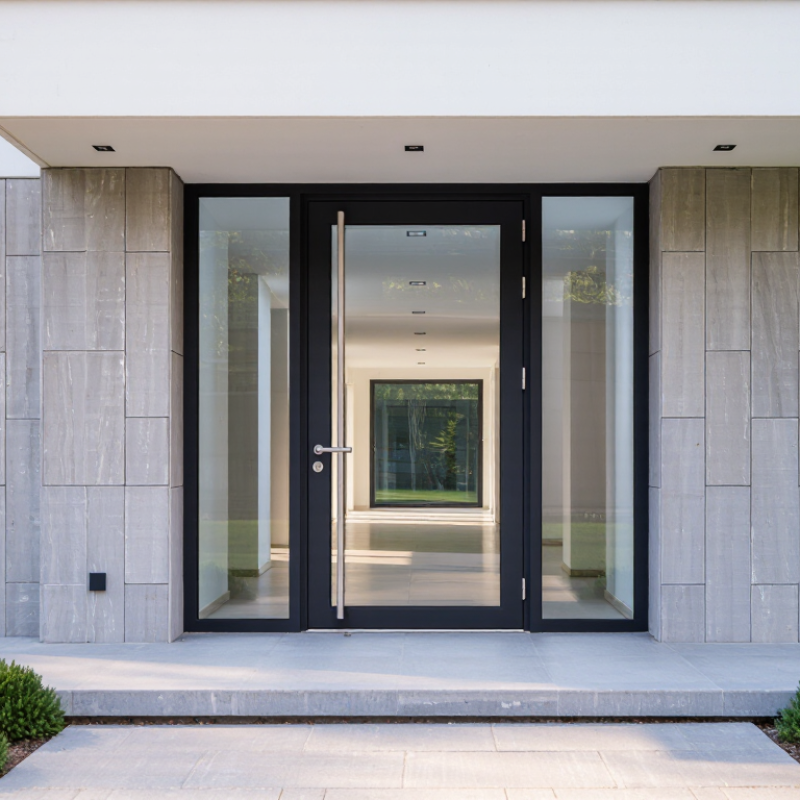
Aluminum front doors suit modern homes because they combine clean geometry with dependable performance. Their slim frames allow larger glass panels, stronger daylight, and clearer views of the entrance. Powder-coated finishes also resist fading, moisture, and everyday scratches. The material does not swell like timber, which helps the door operate smoothly through seasonal changes. For coastal or rainy areas, corrosion-resistant hardware and careful drainage remain important.
The best designs usually include thermal breaks, multi-point locks, compression seals, and insulated glazing. These details reduce heat transfer and outside noise. In practice, precise installation matters as much as the door itself. A poorly aligned frame can cause drafts, water entry, or difficult locking. I have seen beautiful doors underperform because installers ignored the wall opening. Aluminum is not perfect. Dark finishes may absorb strong sunlight, and oversized doors need reinforced hinges and expert support. Check tested U-values, air leakage results, warranty terms, and local weather suitability before choosing a style.
Tips: Compare the frame depth, threshold design, and drainage path. Ask for a physical finish sample, because screens can distort color. Test the lock and handle before final installation. Leave room for maintenance access. A minimalist entrance still needs practical thinking.
Comparing aluminum front door designs requires more than checking photographs. The best option depends on insulation, security, daylight, maintenance, and opening space. A slim thermal-break door can reduce heat transfer while keeping a clean, modern frame. Ask for tested U-values, not vague energy claims. Small details matter.
A pivot door creates a dramatic entrance, but it needs careful floor planning and strong hardware. A full-glass design brings daylight into a dark hallway, although privacy and afternoon heat may become concerns. Solid flush doors offer a quieter, simpler appearance. Louvered designs improve airflow but can collect dust. Double aluminum doors suit wide entrances, yet their meeting point needs accurate adjustment. Narrow-profile doors maximize glass area, while paneled designs add visual weight and privacy.
Check the frame depth, gasket quality, drainage paths, hinge capacity, and locking points. A well-finished powder coating should feel even, with no rough edges around corners. During a real installation review, I would also inspect the threshold after rain. Water should move away from the interior, not gather beside the seal. That test is easy to overlook.
Color samples can mislead under showroom lighting. A dark finish looked refined in one project but showed fingerprints quickly. I would compare samples outdoors, then reconsider the maintenance schedule. The most attractive design is not always the most practical choice. Ask for installation drawings, warranty terms, and independent performance documentation before deciding.
Seven Standout Aluminum Front Door Styles for Contemporary Homes
Modern aluminum doors can feel architectural without looking cold. A slim black-framed glass door suits narrow façades and brings daylight into shaded halls. A pivot door creates a stronger arrival moment, especially beside concrete or pale stone. A flush-panel door offers quieter geometry, while a ribbed-panel design adds controlled shadow across the entrance. Full-height glazed doors suit compact homes, but privacy glass may be necessary. A louvered aluminum door improves airflow in warm climates. An arched aluminum frame softens strict contemporary lines. The seventh option is a mixed-material door, combining aluminum with timber-look panels for visual warmth.
Performance should guide the choice, not appearance alone. The U.S. Department of Energy reports that windows can account for 25–30% of residential heating and cooling energy use. Large glazed entrances therefore need low-emissivity glass, insulated frames, and carefully tested seals. Check the National Fenestration Rating Council label for U-factor, solar heat gain coefficient, and visible transmittance. Lower U-factor generally means better insulation. Details matter.
A pivot door may look impressive, yet its hardware demands accurate installation and regular adjustment. Slim frames can also reduce thermal performance when poorly specified. I would not assume aluminum always feels energy-efficient. Look for thermal breaks, verified air leakage results, and corrosion-resistant finishes. The Fenestration and Glazing Industry Alliance emphasizes testing for air, water, and structural performance. Good design is useful here. Even a beautiful entrance can disappoint when rain reaches the threshold or morning glare overwhelms the foyer.
A practical comparison of seven contemporary aluminum front-door styles using a relative 1–5 design index. Higher scores indicate stronger typical potential for natural light, privacy, and visual impact; these are configuration-based comparisons rather than laboratory performance ratings.
In general, glazed and pivot designs maximize daylight and architectural presence, while solid and louvered configurations provide greater privacy. Actual thermal performance depends on glazing, frame construction, weather seals, orientation, and installation quality.
Aluminum front doors suit clean, contemporary façades, but appearance should not lead the decision. The strongest choices include thermally broken slab doors, insulated-core doors, narrow-frame glass doors, multi-point locking doors, pivot doors, flush-panel doors, and custom-sized entry systems.
A thermal break reduces heat transfer through the frame. That detail matters near cold floors or bright, sun-facing entrances. Low-emissivity glass can also limit winter heat loss and summer heat gain.
Security depends on the whole assembly, not aluminum alone. Look for reinforced lock areas, tested cylinders, strong hinges, and laminated glass where glazing is used. A multi-point lock can resist forced movement better than a single latch.
The frame should sit squarely, with no visible gaps around the threshold. I have seen expensive doors perform poorly after rushed installation. Fit matters more than marketing language.
Energy performance also depends on weather seals and threshold design. Replaceable gaskets are practical when rubber hardens after years of sunlight.
A sloped exterior threshold helps move rain away from the interior floor. Maintenance is usually simple: wash aluminum with mild soap, clear drainage channels, and inspect seals each spring.
Powder-coated surfaces resist routine wear, but scratches still deserve prompt attention. One detail is easy to overlook.
Dark finishes may become hot enough to stress nearby seals in strong afternoon sun. Check local energy and safety requirements before ordering a custom door.
Choosing the best aluminum front door starts with your home's climate, not its appearance. Aluminum resists rust and stays stable through seasonal changes. However, untreated metal can transfer heat quickly. Look for a door with a thermal break and insulated core. Ask for its tested U-value, not just a general energy-efficiency claim. Lower values usually indicate better insulation.
Measure the opening carefully, including wall thickness and finished floor height. A low threshold looks elegant, but it may allow water inside during heavy rain. I have seen this mistake on otherwise excellent installations. Check the door swing, hinge strength, drainage channels, and weather seals. The frame should feel rigid, with no visible movement when you close the door. Small details matter.
Security needs practical attention. Choose a multi-point locking system, reinforced hinge areas, and laminated glass if the design includes glazing. Frosted glass can protect privacy while allowing soft daylight. For coastal homes, request a finish tested for salt exposure. For sunny entrances, ask about color fading and surface temperature. A qualified installer should explain the warranty, adjust the door after installation, and seal the surrounding wall correctly. Installation is part of the door. A beautiful slab can still perform poorly when the frame is uneven or the sealant is rushed. My own preference is simple: compare test data, inspect the hardware, and accept that the lowest price may not be the best value.
Compare insulation, security, daylight, maintenance, and available opening space. Ask for tested U-values, not vague efficiency claims. Small details matter.
A thermal break reduces heat transfer through the aluminum frame. An insulated core can improve indoor comfort. Lower tested U-values usually indicate better insulation.
Full-glass and narrow-profile designs allow more daylight into dark hallways. Frosted glass offers privacy with softer light. Afternoon heat may still become uncomfortable.
Pivot doors create a dramatic entrance, but they need careful floor planning. Strong hardware is essential. Measure twice.
Measure the opening, wall thickness, and finished floor height. Check the door swing and surrounding clearance. A low threshold may admit rainwater.
Look for multi-point locking, reinforced hinge areas, and strong hardware. Laminated glass can improve protection in glazed designs. Do not judge security from appearance alone.
Aluminum resists rust and usually remains stable through seasonal changes. Dark finishes can show fingerprints quickly. Louvered surfaces may collect dust.
The frame should feel rigid when the door closes. Inspect drainage paths, gaskets, hinges, and locking points. After rain, water should move away from the interior.
Not always. Showroom lighting can change how a color appears. Compare samples outdoors, then reconsider the cleaning schedule.
Not necessarily. Review test data, warranty terms, installation drawings, and independent performance documents. I might still overlook a small seal detail.
Choosing the right Aluminum Front Door can transform a modern home by combining clean design, lasting durability, and practical performance. This article explores why aluminum is well suited to contemporary architecture, including its resistance to weather, lightweight construction, design flexibility, and low-maintenance finish. It also explains the key factors homeowners should compare, such as door configuration, glass options, insulation, hardware, color, privacy, and overall proportions.
The guide presents seven standout aluminum door styles, ranging from minimalist solid panels and oversized glass entrances to bold geometric designs and warm wood-look finishes. It also considers essential features such as security, energy efficiency, ventilation, weather sealing, and long-term maintenance. By balancing appearance, comfort, safety, budget, and the architectural character of the home, readers can confidently select an Aluminum Front Door that delivers both contemporary appeal and reliable everyday performance.

OptiDoors